
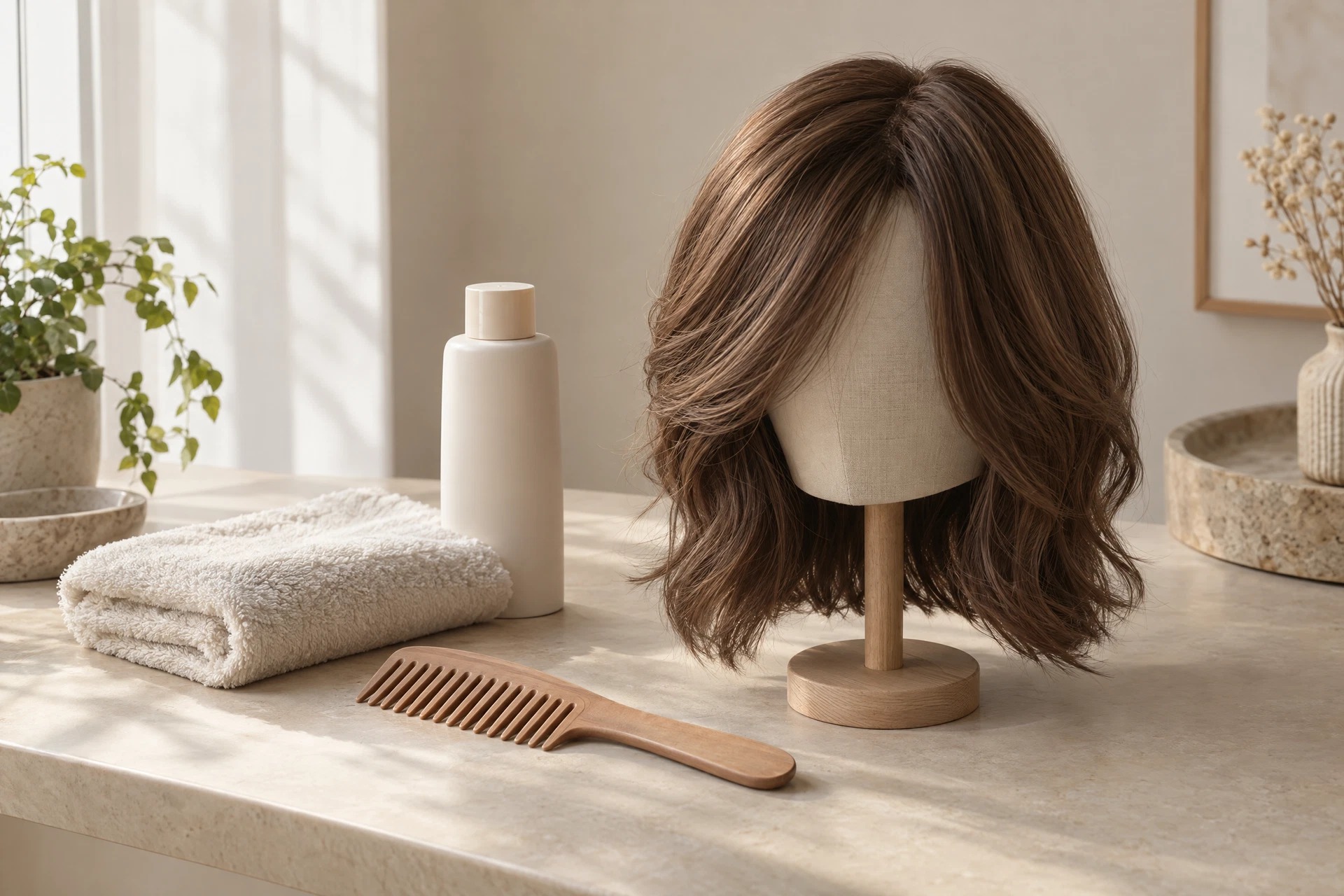
Heat styling wigs can transform your look quickly, but using a curling iron or flat iron without first confirming the fiber type risks melted strands and ruined pieces. This guide explains how to distinguish heat-friendly from non-resistant fibers, how to perform a strand test using the product’s confirmed limit, and practical styling tips that keep your wigs looking their best.
Why reading the label matters before heat styling wigs
Wig labels and product pages contain key details: fiber composition (synthetic, heat-friendly synthetic, human hair), any manufacturer-confirmed heat limits, and recommended styling tools. Those details determine whether a wig tolerates hot tools and, if so, what settings are safe. Ignoring the label is the most common cause of melted panels, frizzed fiber, and unexpected texture changes.
Know the fiber categories and what they mean
There are three practical categories to watch for:
- Human hair wigs: Styled like natural hair. Labels will typically list construction and may note whether the hair is processed. Human hair accepts heat tools but still requires careful technique and suitable products.
- Heat-friendly (heat-resistant) synthetics: Engineered to withstand some degree of heat. These will usually state a confirmed temperature limit or recommended tool type on the label or product page.
- Non-heat-resistant synthetics: Low-melt fibers that will deform or fuse under heat. These should be styled only with cool tools (steam, finger-styling, rollers that don’t involve heat) and products designed for synthetics.
When the label is ambiguous, treat the piece conservatively and perform a strand test before broad heat exposure.
How to find and interpret the confirmed heat limit
If a product lists a confirmed heat limit, that number is the starting point for safe styling. Manufacturers may provide a maximum temperature (for example, a specific degree) or a range. Use the lower end of any range for initial tests. If the product page or label refers you to care instructions, check those for detailed guidance.
Note: some labels specify tool types rather than a temperature—e.g., "low-heat curling iron only"—which implies you should use the gentlest effective setting your tool offers. When in doubt, use a variable-temperature tool and begin on the lowest practical setting.
Performing a proper strand test
A strand test is essential whenever the label is missing a confirmed limit or when you’re unsure of a wig’s history. Steps:
- Choose an inconspicuous area: use a hidden section at the nape, inside a side part, or a small weft near the cap edge.
- Isolate a small sample: two to three strands wide is enough to evaluate effect without ruining a large area.
- Start below the confirmed limit or at the lowest tool setting you plan to use. Hold the tool briefly—just a second or two—then inspect the fiber. If the label provided a confirmed time exposure, follow that; otherwise keep contact minimal.
- Observe the results: look for gloss loss, drooping, brittle texture, fuzzing, or any melting/adhesive changes. If you see damage, stop immediately—do not increase temperature.
- If the strand survives, increase the setting slowly in small increments and repeat until you reach the confirmed limit or the desired effect without visible damage.
Keep detailed notes: which setting produced the effect you wanted, how long you held the tool, and the location of the tested strand. That will help reproduce the result safely later.
Technique adjustments based on fiber type
Adapting your technique can extend the life of a wig:
- Human hair: Use heat-protectant products labeled for wigs or hair extensions, avoid excessive tension while styling, and work in small sections for even heat distribution. Finish with light serum or style spray for hold and shine.
- Heat-friendly synthetics: Use short contact times and lower settings than you might for human hair. A clamp-free curling method—wrapping fiber around a wand without clamping—reduces localized pressure. Consider styling with cool air or steam for softer waves.
- Non-resistant synthetics: Skip direct heat. Use rollers, braids, steam, or gentle manual shaping when damp. Finger-combing and lightweight mousse formulated for synthetics can add body without heat.
Tools and accessories that reduce risk
Choose the right implements to match the confirmed limit and your technique:
- Variable-temperature irons that read in small increments let you dial precise settings for tests and styling.
- Heat protectant sprays designed for wigs or synthetic fibers help with human hair and some heat-friendly synthetics—confirm product compatibility first.
- Cloth or silicone heat mats protect surfaces; a heat-resistant glove helps if you hold fiber while styling.
- Low-heat steam stylers offer shaping with reduced direct contact; they can be useful for both human hair and some heat-friendly synthetics but check label guidance first.
Post-styling care and storage
How you treat a wig after heat styling affects longevity. Let any residual heat dissipate fully before placing the wig on a stand or storing. For human-hair wigs, use light conditioning products sparingly and follow the manufacturer’s care directions. For synthetics, comb gently with a wide-tooth wig brush and avoid products with oils that can change fiber texture. Store on a wig stand or in a breathable bag to preserve shape and prevent tangling.
Common mistakes and how to avoid them
Protect your investment by avoiding these errors:
- Assuming all synthetics are heat-friendly—always verify the label or perform a strand test.
- Using the highest tool setting to speed up styling—this increases the risk of irreversible damage.
- Styling large sections at once—this results in inconsistent heat exposure and uneven texture.
- Neglecting to test accessories—some clips, adhesives, or weft linings react poorly to heat.
When professional help is the safer choice
If the wig is expensive, custom-colored, or a key display piece, consider consulting a professional wig stylist. Professionals can test small areas, use salon-grade tools, and suggest appropriate products without risking damage. If you order wigs for resale or business use, our wholesale page and product descriptions often include extra technical details; confirm limits and care policies directly with the company via contact before applying heat to multiple units.
Where to find more care information and compatible items
Product pages and the care section provide specific guidance for each piece. Browse human-hair options in our human hair wigs collection if you plan to regularly use hot tools. If you’re unsure whether a style is heat-friendly, compare options in our lace front wigs and regular wigs sections—labels often specify fiber type and styling limits. Accessories that aid safe styling are listed under accessories, and new items with updated heat specs appear in new arrivals. For general upkeep after heat styling, see our care resources.
Conclusion
Heat styling wigs can deliver polished, long-lasting looks when you respect fiber type, confirmed heat limits, and the outcome of a proper strand test. Always read labels and product pages, begin with conservative settings, and document what works for each piece. When in doubt—especially with high-value wigs—use cooler techniques or consult a professional. If you’re shopping for heat-tolerant options or need technical details for multiple units, contact ARIS BEAUTY SUPPLY to confirm limits, pricing, and order particulars before styling.