
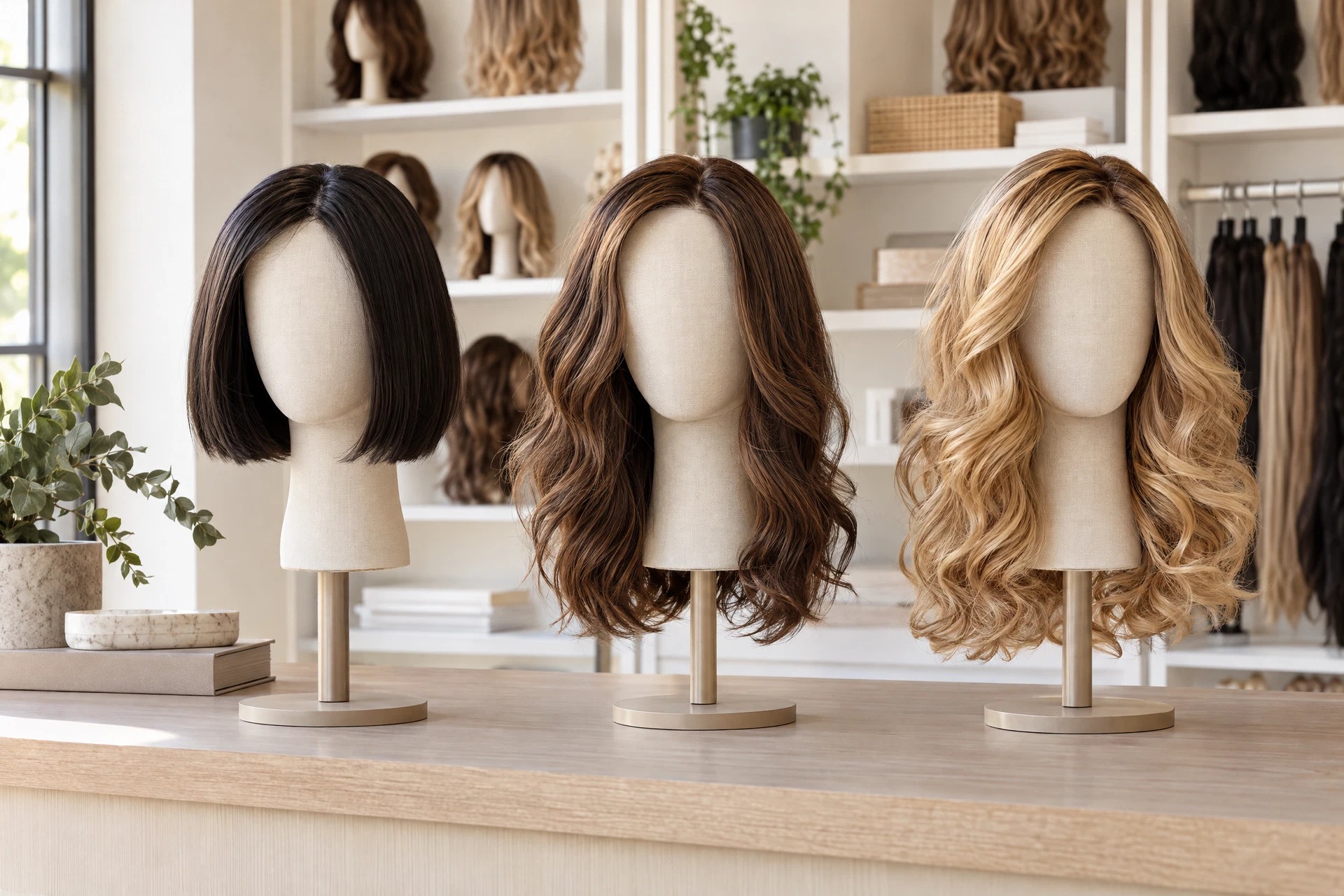
Teaching customers how to care for a wig while they’re still in the store improves product satisfaction, reduces returns, and positions sales staff as trusted advisors. This article focuses on practical, label-centered approaches you can use at the point of sale: concise handouts tied to product labels, short live demonstrations, and question-driven conversations that reveal customer needs. The tactics below are designed to be actionable for salespeople and store managers without making performance or medical claims.
Start with the label: make it the education anchor
The product label should be the unambiguous reference point for any care advice you give. Encourage staff to read the label with the customer every time a sale or fitting happens. Tie any verbal tips directly to words on the label—if it says "wash gently" or "air dry only," demonstrate what those terms mean in practice rather than offering a competing opinion.
- Train employees to summarize label instructions in one sentence: "This label asks for cold-water hand wash and lay-flat drying."
- Use the label to set expectations about longevity and care effort, without quantifying how long a customer will use the wig.
- When labels conflict across products, show the customer both and explain the differences so they can choose based on their willingness to follow care routines.
Design concise, label-based handouts
Handouts are the single most reliable memory aid a customer will take home. Keep them short, clearly connected to the label, and formatted for quick reference. Include only instructions that are consistent with the product label.
- Use a one-page layout: a bold headline, a 3–5 bullet checklist, and a QR code or link to the store care page for full guidance.
- Organize bullets around the label's keywords—washing, drying, styling, storage, and product restrictions (e.g., "do not bleach").
- Include a small spaces for the sales associate to write the product SKU or model, so the handout becomes product-specific.
- Offer versions for different fiber types (synthetic, blended, human hair) and for different constructions (lace front vs. capless).
Short live demonstrations: show, don’t lecture
A brief live demo during the sale builds customer confidence. Keep demonstrations under three minutes and always align steps with the label. Use a quiet corner of the sales floor with a chair and a mirror.
- Demonstrate one or two actions the customer can replicate at home—how to detangle with the proper brush, how to pat shampoo instead of rubbing, or how to lay a wig flat to dry.
- Use props: sample bottles of neutral wig shampoo, wide-tooth combs, satin storage bags, and a drying stand. Let customers touch and try the brush or comb under supervision.
- Ask the customer to repeat the action once. This increases recall and reveals technique gaps.
Use guided questions to tailor the lesson
Instead of giving a fixed script, train staff to ask a few targeted questions that connect product care to the customer’s lifestyle. This keeps the advice practical and realistic.
- Questions to consider: "How often do you plan to wear this wig?" "Do you want low-maintenance styling?" "Do you have a preferred place to dry or store wigs at home?"
- Use answers to recommend specific care steps or accessories—if a customer plans daily wear, emphasize a gentle nightly storage routine; if they travel frequently, highlight compact storage options.
- Document answers on the handout so follow-up communications can reference the customer’s stated usage patterns.
Teach accessory selection as part of care education
Accessories are both functional and revenue drivers. Present them as part of a care system rather than add-ons. The label often hints at needed accessories (e.g., "use soft brush"); make those explicit at the point of sale.
- Match accessories to label instructions: satin caps and pillows for storage, mesh stands for drying, and low-heat styling tools only where the label permits heat.
- Offer bundled suggestions on the handout: "If label requires hand wash, consider adding a travel basin and a gentle cleanser."
- When an accessory is essential to follow the label, make that clear—"This wig should be stored flat; this storage box helps you do that safely."
Record information for post-sale follow-up
Point-of-sale education is more effective when reinforced. Collect a minimal set of details (email or phone) with the customer’s permission so you can send a reminder tailored to the label and their stated habits. Keep messages practical and succinct—link back to your care page for full instructions.
- Send a brief follow-up one week after purchase: a friendly note referencing the SKU and the key home-care actions from the handout.
- Offer an invitation to return for a free quick check—this can be framed as a complimentary care tune-up rather than a repair.
- Store care notes in the customer file so future purchases can be matched to their experience and preferences.
Train staff using role play tied to real labels
Role-playing sells better than lectures. Practice scenarios where staff read a label to a customer, hand over a tailored handout, and run a two-minute demo. Feedback should focus on clarity and label alignment.
- Create a short internal checklist: read label aloud, handout customized, one demo step repeated by customer, document answers for follow-up.
- Use actual product labels during training to highlight differences between products and reinforce the habit of reading the label every time.
- Rotate team members through both sales and observer roles so training identifies unclear points that customers often ask about.
Measure what matters: returns, satisfaction and repeat visits
Establish a small set of metrics to evaluate whether point-of-sale education is making a difference. Avoid metrics that imply specific outcomes; keep measures about process and customer experience.
- Track returns and reasons: if returns related to perceived product damage drop after education changes, that’s a positive signal.
- Collect a short satisfaction metric tied to care confidence: ask customers if they felt prepared to care for their purchase when they left the store.
- Monitor repeat visits and accessory sales—customers who return for supplies or tune-ups indicate the education stuck.
Document limits and avoid overpromising
Staff should be trained to stay within the label and avoid universal claims about durability or health outcomes. If a customer asks for guarantees or timelines, direct them to the return policy or escalate to management. Keep demonstrations practical and non-prescriptive.
- Use language that reflects variability: "Following these label instructions helps maintain appearance; actual results depend on use and environment."
- If a customer needs stronger assurances (warranty, commercial use guidance), refer them to the company return or wholesale pages for policy details.
Conclusion: small steps, consistent messaging
Point-of-sale wig care education works best when it’s anchored in the product label, reinforced by concise handouts, demonstrated briefly in-store, and tailored through guided questions. These tactics reduce confusion and create consistent expectations without making claims the label or company cannot support. For stores, the investment in short demos and staff training pays back through fewer service cases and more confident customers who return for accessories and follow-up care.
For tools and supplies to support demonstrations and handouts, see our accessories collection and care resources. If you need wholesale quantities or training materials for multiple locations, check our wholesale page or contact the team for confirmation about policies. For returns or shipping details, see the respective information pages.