
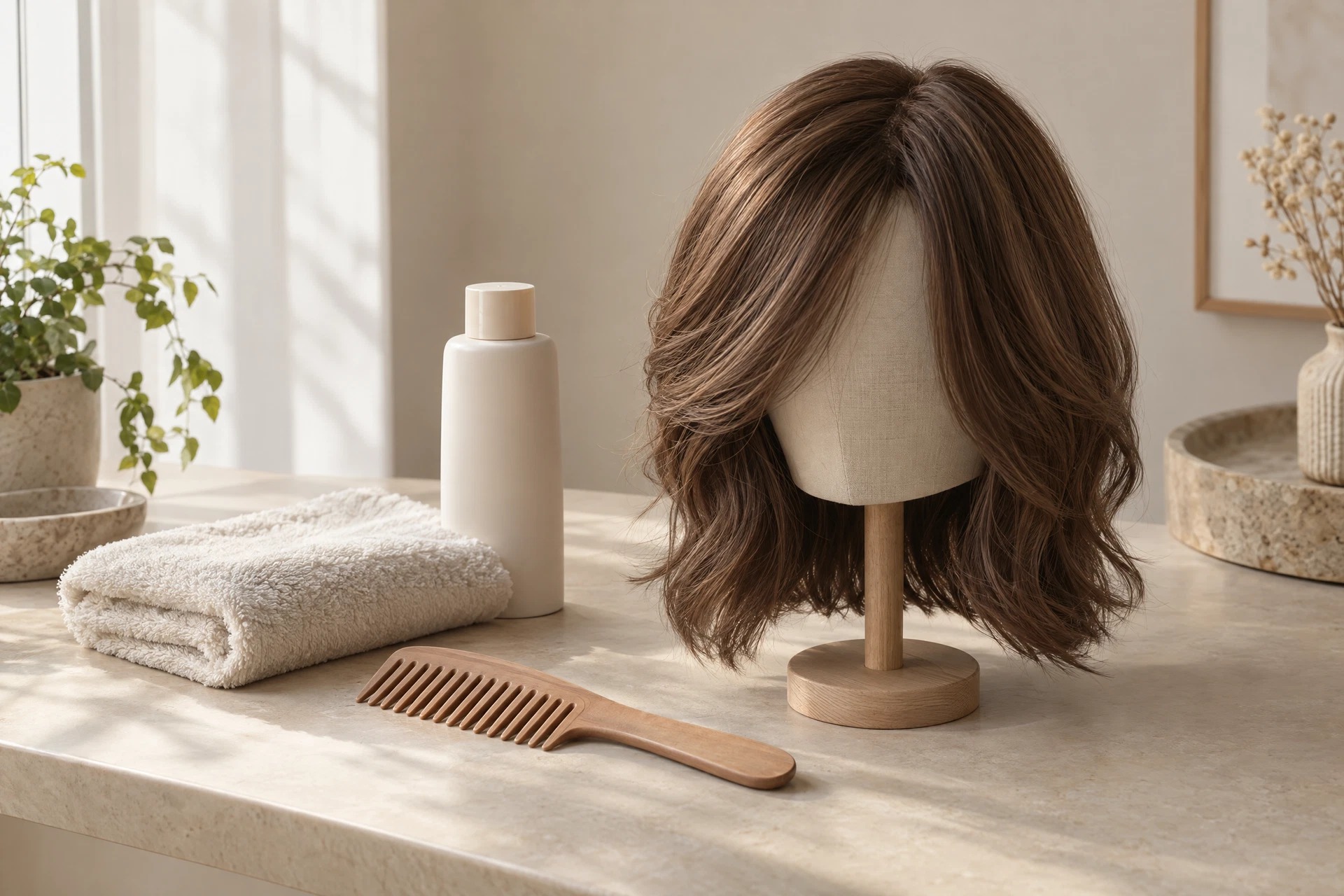
Straight wigs offer a sleek, classic look but are especially vulnerable to friction where hair meets the nape, on collars, and beneath hats. This article explains why those high-wear areas matter, shows simple adjustments to clothing and tools, and lays out a consistent, practical care routine to keep straight wigs smoother, longer.
Why nape friction and everyday rubbing matter
Straight fibers—synthetic or human—tend to lie flat and reflect light, which makes abrasion damage more noticeable. Friction at the nape and along the hairline causes tangling, matting, and loss of shine. Repeated contact with rough fabrics or constant rubbing from collars and straps abrades the cuticle (human hair) or the outer layer of synthetic fibers, leading to split fibers, fuzz, and irregular texture. Understanding common friction points lets you target prevention without over-washing or heavy-handed styling.
Spot the common friction hotspots
- Nape: Where the wig base meets the neck — often the first place you’ll see tangling.
- Behind the ears: Movement and head turns cause rubbing against frames and straps.
- Under collars: High collars, wool, and coarse denim press and rub when you move.
- Hat bands and hoods: Repeated removal and shifting create consistent abrasion.
- Shoulder straps: Bag straps or thin coat straps cause a narrow, repetitive contact area.
Choose clothing and accessories to minimize rubbing
Small clothing choices make big differences. When wearing a straight wig, aim to reduce direct contact and sliding between fabric and hair.
- Wear softer fabrics next to the nape. Cotton tees, silk or satin-lined collars, and jersey knit reduce abrasion compared with coarse wool or rough denim.
- Use shoulder guards or thin scarf linings under bag straps. A lightweight silk scarf looped under a strap prevents a narrow rubbing point from forming a line of wear on the hair.
- Mind collar styles. Low or open collars prevent sustained pressure at the nape. If you prefer high collars, consider a removable satin neck liner or an under-scarf band to create a smooth surface.
- Choose hat and hood linings carefully. If you wear hats often, pick ones with softer inner bands or add a silk/satin sweatband to reduce friction when putting hats on and off.
Tools that help: brushes, combs and detanglers for straight wigs
Using the right tools and techniques preserves the smooth fall of straight hair. Avoid aggressive pulling and prioritize glide and control.
- Wide-tooth combs: Start at the ends and work upward to remove knots gently. This reduces stress at the nape where tangles collect.
- Sleeved or paddle brushes designed for wigs: These distribute pressure and reduce snagging. For synthetic fibers, use brushes labeled safe for synthetics; for human hair wigs, a soft-bristle brush works well.
- Leave-in emollients and lightweight detanglers: Use products formulated for wigs. A mist detangler can allow the comb to glide, especially at the nape, without saturating the cap. Apply sparingly to avoid build-up.
- Finger detangling: For delicate tangles at the hairline and nape, gently use your fingertips to loosen snarls before using a tool.
Daily routine: small steps that prevent big damage
Consistency keeps straight wigs looking fresh. A short daily routine takes just a few minutes but saves hours of restorative work later.
- At removal: Always unfasten clips and combs before taking off the wig. Lift gently from front to back to avoid snagging at the nape.
- Detangle daily: Lightly mist detangler and comb from ends to roots, focusing on the nape and behind-the-ears areas. If you wear the wig every day, a quick detangle nightly prevents matting.
- Air and rest: After removal, place the wig on a stand or mannequin head with good airflow. Avoid folding or crushing the nape area; let the fibers fall naturally.
- Inspect for buildup: Monthly, check the inside nape and lining for oil or product accumulation. Light surface cleaning keeps friction from worsening.
Weekly and monthly maintenance steps
Care frequency depends on wear patterns and product use, but a few focused steps reduce long-term friction damage.
- Weekly: Light cleanse according to the wig’s care label. After washing, finger-comb while damp and let the wig air dry on a stand to preserve the straight fall.
- Monthly: Deep-condition human hair wigs or apply a restorative product suitable for the fiber type. For synthetics, use a conditioning spray meant for synthetic wigs to smooth the surface.
- Cap care: Check the base and straps monthly. Replace or repair any rough edges or exposed stitching that might rub the nape.
Styling methods that reduce friction risk
Some styling choices increase friction while others minimize it. Opt for styles and finishes that keep straight hair lying flat and reduce rubbing at contact points.
- Low, loose styles: Letting the wig fall naturally reduces tension at the nape. If you need to secure hair away from the neck, use soft-covered clips or fabric-covered bands rather than tight elastics.
- Avoid heavy products near the nape: Oils and heavy creams attract dust and create sticky surfaces that catch on fabrics.
- Seal ends gently: For human hair wigs, occasional light sealing of ends can reduce split ends that exacerbate friction. Follow the product label and the wig’s specific instructions.
Protecting the cap and hairline from internal friction
Damage isn’t just external. Internal rubbing between the wig cap and your scalp or between cap layers can create wear at the hairline and nape.
- Choose the right cap size and adjust straps for a secure, comfortable fit. A wig that slides causes more friction than one that sits correctly.
- Use soft wig liners: Breathable, smooth liners reduce movement and protect the underside of the wig from oils and perspiration.
- Repositioning prevention: When you sleep or nap in a wig (not generally recommended for daily wear unless specified by the wig type), use a satin pillowcase to reduce movement and friction.
Quick fixes for early tangles and nape matting
If you notice small mats at the nape, quick targeted actions prevent escalation.
- Apply a small amount of detangler directly to the mat, let it sit briefly, then use fingers to loosen before combing.
- For stubborn tangles, section the area and work slowly from the ends up, never forcing a comb through. If necessary, use a drop of wig-safe lubricant to ease stubborn knots.
- When mats are severe and beyond home repair, consult a professional wig technician rather than attempting cutting or aggressive heat fixes yourself.
When to contact Aris Beauty Supply for questions or repairs
If you’re unsure about the best cleanser, conditioner, or accessory for a specific straight wig, or if a cap repair is needed, contact Aris Beauty Supply for guidance. Our catalog and care resources can help you choose compatible products and replacement parts. For wholesale or bulk needs, confirm policies, pricing, minimums and lead times with the company directly. For product returns, shipping and care policies, see the relevant sections for full details.
Useful internal links for further reading and purchasing options:
- Browse collections
- Lace front wigs
- Regular wigs
- Human hair wigs
- Wig accessories
- Care resources
- Contact Aris Beauty Supply
Conclusion
Protecting a straight wig from everyday friction is largely about small, consistent choices: softer fabrics at points of contact, the right brushes and detanglers, a short daily routine, and attention to the cap fit. Target the nape and behind-the-ear zones with preventive measures, and you’ll preserve the sleek appearance that makes straight wigs so appealing. If a problem goes beyond routine care, reach out to Aris Beauty Supply for guidance on compatible products, repairs, and policy details.