
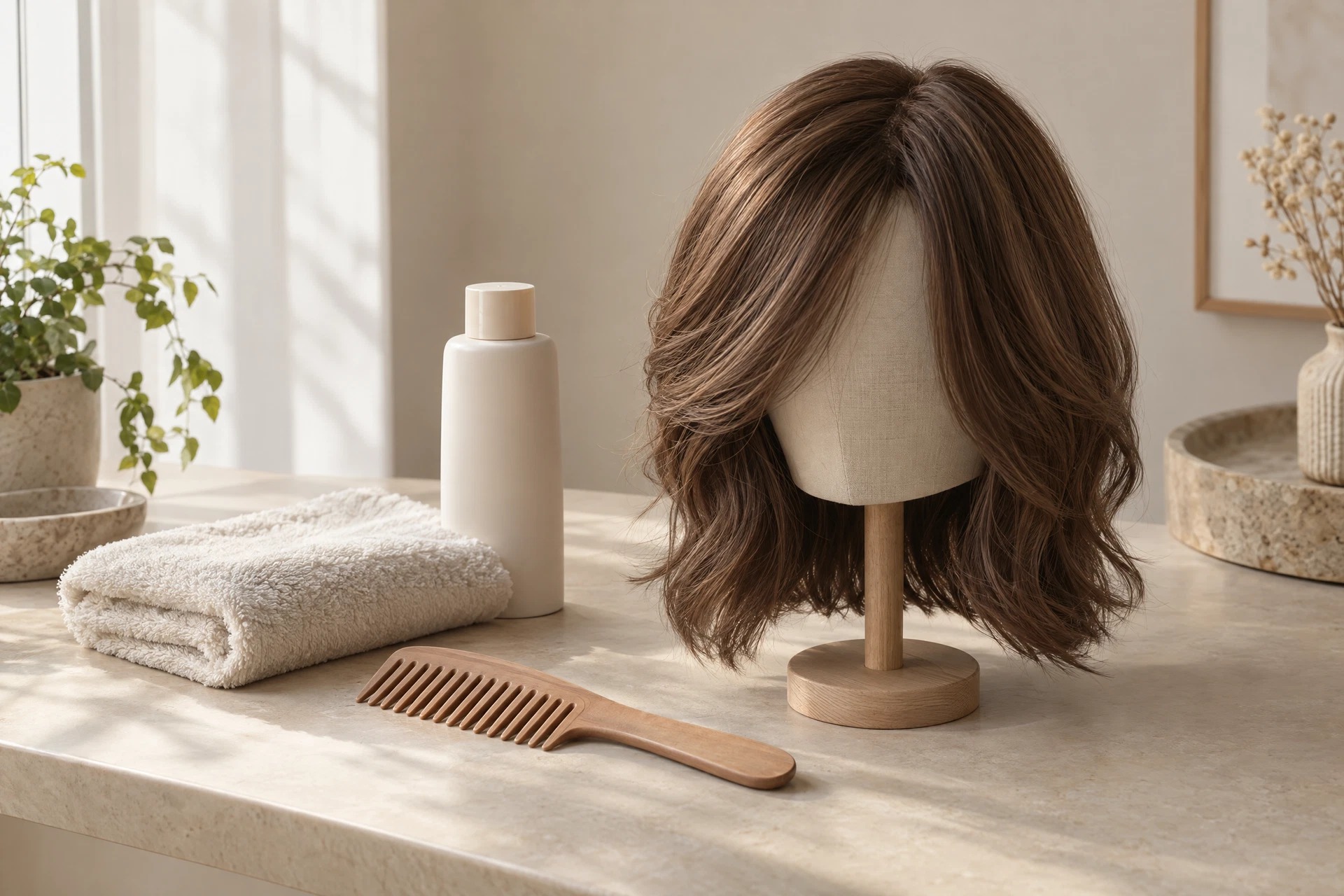
Warm weather brings different challenges for wig wearers: sweat, humidity, prolonged sun exposure, and increased activity. This article focuses on practical summer wig care—how to keep wigs comfortable and fresh during heat, manage moisture and odor, and maintain clean liners without making medical claims. You’ll find actionable steps, examples, and routine habits to protect your wigs and preserve your comfort through the season.
Why summer wig care matters
High temperatures and humidity accelerate buildup of sweat, skin oils, sunscreen, and environmental grime. That can lead to dampness trapped between the scalp and wig cap, faster odor development, and a general feeling of discomfort. Proper summer wig care reduces wear-and-tear on fiber and cap materials and helps keep wigs looking and feeling fresher for longer.
Plan regular comfort breaks
Comfort breaks are short periods when you remove the wig to air the scalp and the cap. They’re one of the simplest tools for summer wig care because they let trapped moisture evaporate and lower heat against your skin.
- Timing: Schedule breaks based on activity and heat exposure. After exercise, outdoor events, or several hours of continuous wear, plan a 10–20 minute break in a cool, shaded area.
- What to do during breaks: Gently lift the wig to allow airflow. If you use a wig liner, remove it and set it aside to air separately. Pat the scalp with a soft, absorbent cloth if needed.
- Remote options: If you’re away from home, carry a compact, breathable storage bag or a soft towel to rest the wig on while it airs. Avoid stuffing the wig into non-breathable containers which trap heat.
Manage moisture without over-washing
Frequent full washing can shorten the life of a wig—especially synthetic styles. Instead, address moisture between washes.
- Spot-dry damp areas: Use a clean microfiber cloth or absorbent towel to blot moisture from the inside cap and lace areas. Press gently; do not rub, which can fray fibers or lace.
- Air drying: After blotting, place the wig on a breathable stand in a well-ventilated area. Avoid direct sun exposure for prolonged periods—UV can fade color and weaken fibers.
- Use small fans: A low-speed fan aimed at the inside cap speeds evaporation without stressing the hair fiber. Keep the distance moderate to prevent tangling or undue agitation of the wig hair.
Keep liners clean and breathable
Wig liners are a first line of defense for moisture and oils. Clean, breathable liners can make a big difference in summer wig comfort.
- Choose the right liner: Look for moisture-wicking fabrics like bamboo blends or technical performance materials. These draw sweat away from the scalp and dry faster than cotton.
- Wash liners frequently: Clean liners more often in summer. Follow the care instructions on the liner—many are hand-washable or safe on a gentle cycle. Always air-dry flat or on a hanger in shade.
- Rotate liners: Keep two or three liners in rotation. Swap a dry one in when the one you wore is damp; this reduces direct contact between damp fabric and your scalp.
Freshen wigs safely between washes
When full washing isn’t necessary, these steps help freshen wigs and reduce odors.
- Light deodorizing: Use products made specifically for wigs or a saturated mixture recommended for the wig material. Apply sparingly to the wig’s underside and cap area, not to the hairline or fiber surface in excess.
- Steam refresh: For human hair wigs, a brief steam treatment (keeping the steam at a safe distance and following product guidance) can help relax fibers and reduce creasing. For synthetic wigs, avoid steam unless the fiber is heat-friendly and the manufacturer allows it.
- Brush and reshape: Use a wide-tooth comb or a brush designed for wigs to detangle gently. Reshape the part and style, then let the wig rest on a stand to settle.
Protect the cap and lace from sweat and products
Sweat and topical products like sunscreens or conditioners can deposit on caps and lace, accelerating wear. Take preventive measures to preserve the cap’s structure and appearance.
- Apply products before putting on the wig: Let sprays, lotions, and sunscreens absorb or dry fully before donning a wig to avoid transfer to the cap or hairline.
- Use barrier strips or scalp protectors: Thin, breathable barriers placed along the hairline can limit product migration onto lace and adhesive areas. Ensure the product is compatible with your wig and adhesive system.
- Gentle cleansing of cap edges: When needed, clean the edge of the cap or lace with a soft cloth and a mild cleaner recommended for the wig material. Rinse thoroughly and air-dry to maintain attachment surfaces.
Adjust your styling routine for warmer months
Heat, humidity, and frequent activity call for simplified styles that breathe and are easy to maintain.
- Choose looser styles: Updos, low buns, or loose braids reduce scalp coverage and increase airflow compared to dense, layered styles.
- Limit heavy leave-in products: Thick creams and heavy oils can trap heat and attract dirt in warm weather. Opt for lightweight sprays or mists formulated for the wig type.
- Secure gently: If you use pins or clips, avoid over-tightening. Allowing a little movement reduces pressure points and improves comfort during long wear.
Storage and transport when you’re out and about
How you store and carry your wig during summer activities impacts its longevity and freshness.
- Use breathable cases: A canvas or mesh bag ventilates better than plastic, reducing trapped humidity when you’re away from home.
- Short-term storage: For quick breaks, lay the wig on a clean towel or a portable wig stand rather than stuffing it into a closed purse.
- Keep accessories handy: Carry a small care kit—microfiber cloth, spare liner, a few pins, and a compact stand or pouch—so you can manage comfort and moisture promptly.
When to wash and when to consult care guidance
Knowing when to give a full wash versus a targeted freshen-up preserves the wig’s materials.
- Wash when necessary: If oils, product buildup, or persistent odor remain after spot treatments and airing, follow the manufacturer’s instructions for a full wash appropriate to the wig type.
- Inspect the cap and hairline: Regularly check attachment points and lace for loosening or wear that might become worse with heat and moisture. Address any concerns early to avoid larger repairs.
- Consult product care pages: For model-specific guidance—including recommended cleansers and methods—refer to the product care resources. You can find broader maintenance guidance in the care section linked below.
Practical summer kit checklist
Assemble a compact summer kit to manage moisture, comfort, and quick touch-ups:
- Breathable spare wig liner (2–3 in rotation)
- Microfiber towel or absorbent cloth
- Small portable wig stand or ventilated storage bag
- Wide-tooth comb or wig brush
- Lightweight freshening spray formulated for your wig type
- Soft pins or clips for gentle securing
Conclusion: Small habits, big comfort
Summer wig care is about practical habits: taking comfort breaks, managing moisture promptly, keeping liners clean, and simplifying styling. These small steps reduce stress on the wig cap and fibers, maintain appearance, and—most importantly—keep you comfortable. For product-specific instructions, cleaning recommendations, or accessories to help implement these tips, browse the collections and care pages linked below or contact us for guidance. Orders and wholesale inquiries are confirmed directly by the company.
Helpful links
- Care — general maintenance guidance
- Accessories — liners, stands, and care tools
- Regular wigs — style options that breathe
- Lace front wigs — managing lace and edges
- Human hair wigs — refresh and styling notes
- Contact — email inquiries for orders and assistance