
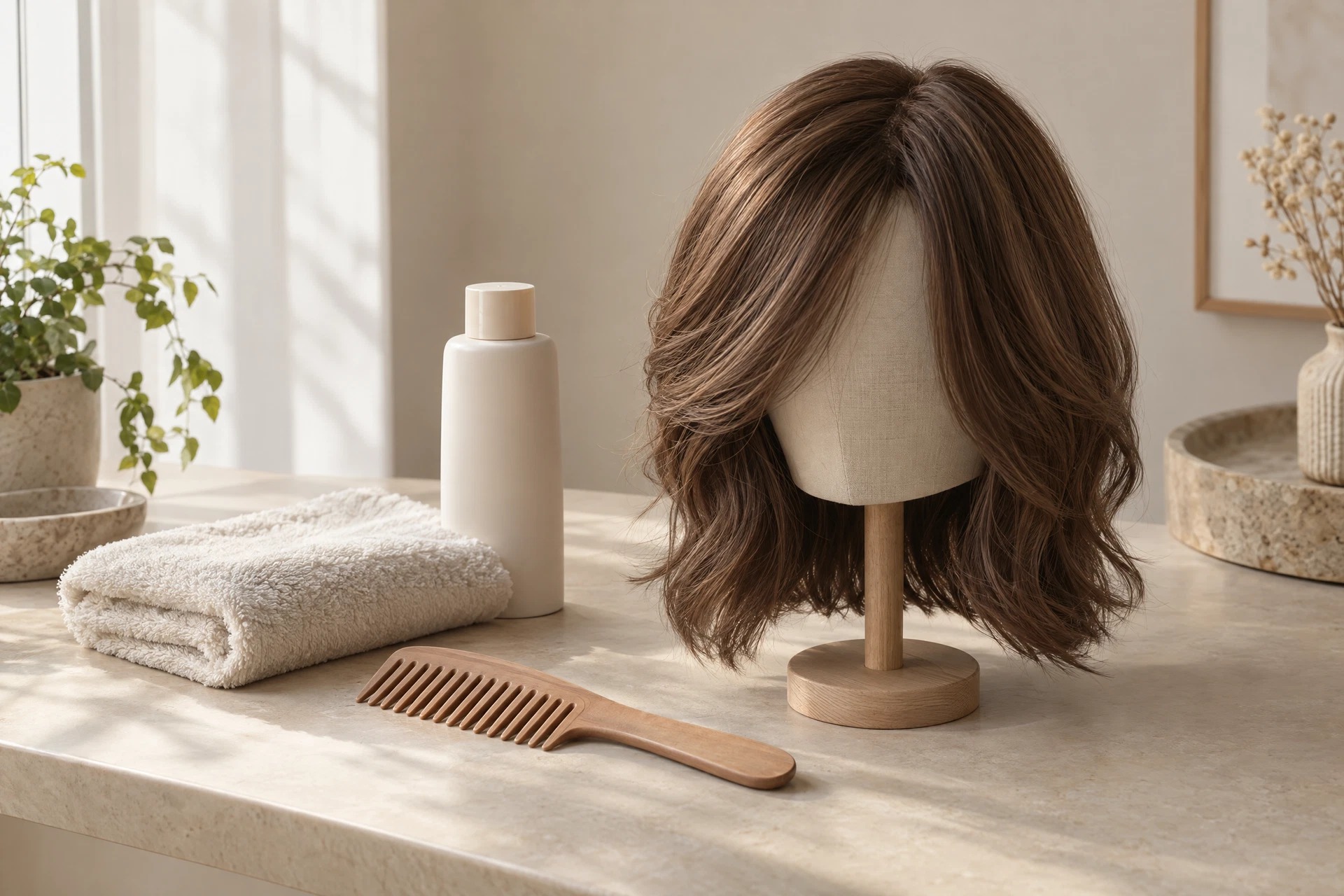
Storing wigs between wears is more than tucking them away. The right approach preserves shape, prevents odor and fiber damage, and saves time styling. This guide focuses on keeping wigs clean and completely dry before storage, using breathable dust protection, maintaining form, and avoiding heat or moisture exposure that shortens wig life.
1. Why proper storage matters
Wigs—synthetic or human hair—are vulnerable when not worn. Oils from your scalp, leftover styling products, trapped moisture, and compression can all cause matting, odor, discoloration and premature wear. Storing wigs correctly protects your investment and reduces styling time later. Consider storage part of your routine, not an afterthought.
2. Always clean and fully dry before storing
The single most important rule: never store a wig if it's damp or has product buildup. Moisture promotes mildew and unpleasant smells; product residues attract dust and can stiffen fibers.
- Lightly shake or brush the wig to remove loose debris before any washing.
- Follow product-specific cleaning instructions for synthetic or human-hair wigs—use recommended shampoos and conditioners and rinse thoroughly.
- After washing, blot excess water with a towel and allow the wig to air-dry fully on a wig stand or a breathable wig head. Heat-accelerated drying can deform caps or damage fiber finishes—refer to the product label for heat guidance.
3. Choose breathable dust protection
Sealing a wig in a completely airtight container may sound protective, but it can trap residual moisture and odors. Breathable storage lets air circulate, preventing mildew while keeping dust out.
- Canvas, muslin, or cotton drawstring bags are ideal for short- to medium-term storage. They block dust yet allow airflow.
- Mesh wig bags provide excellent ventilation and make it easy to see what’s inside without handling the wig too much.
- For longer-term storage, use a breathable box lined with acid-free tissue paper. Avoid plastic bags unless you also include a moisture absorber and you’re certain the wig is fully dry.
4. Maintain shape with the right supports
Maintaining a wig’s shape is crucial to avoid creases, flattened crowns, or misshapen hairlines. The support you choose depends on available space and how often you wear the wig.
- Wig stands and heads: For daily or weekly wear, a foam or canvas wig stand keeps the cap and hair in natural position. Upright support prevents tangles and helps the style fall correctly.
- Collapsed styles or travel: If you need to pack a wig flat, turn the wig inside out and stuff the crown with soft tissue to preserve volume, then place it inside a breathable bag. Avoid folding the fringe or hairline area.
- Neck support: When storing on a stand, slightly tilt the wig forward so gravity sits the hairline in a natural position rather than pulling it back.
5. Keep wigs away from heat sources and direct sunlight
Heat and sunlight fade color and can damage fibers, elastic bands and lace fronts. Store wigs in a cool, shaded place away from radiators, windows with strong sun exposure, and electronics that emit heat.
- Attics and basements: These can be problematic—attics often get very hot, while basements can be damp. Choose a closet or drawer in a climate-stable area of the home.
- Car storage: Avoid leaving wigs in a vehicle. Temperatures inside cars can rise quickly and harm fibers and adhesives.
6. Prevent tangles and hold styles without heavy product
Excess styling product during storage creates buildup. For styles you want to keep, use gentle options that won't stiffen fibers over time.
- Wrap techniques: Silk or satin wraps around the front and sides help keep curls or waves tidy. Secure lightly with hairpins that won’t catch or tear lace.
- Wide-tooth comb: Smooth the hair before storage with a wide-tooth comb to detangle without breaking fibers.
- Loose braid or ponytail: For long wigs, loosely braid or tie hair with a fabric-covered hair tie to reduce tangling while avoiding tight tension that can create creases.
7. Rotate and inspect regularly
If you own multiple wigs, rotate their use and inspect them periodically. Regular checks help you spot any early mildew, insect activity, or fiber changes.
- Air and brush: Take stored wigs out every few weeks to air briefly and brush gently—this refreshes circulation and prevents a stale odor from developing.
- Spot-clean if needed: If you find a small spot of residual product or dust, clean only that area according to the wig’s care instructions instead of repeated full washes.
8. Storage solutions by type of wig
Different wig types need slightly different approaches.
- Human hair wigs: Because they behave like natural hair, use breathable stands and keep them conditioned before storage. Avoid sealing in plastic long-term unless perfectly dry.
- Synthetic wigs: These are more heat-sensitive. Store away from sunlight and high temperatures, and use breathable bags to prevent static and dust accumulation.
- Lace-front and monofilament caps: Handle the edges carefully when storing to avoid stretching. Consider lightweight head forms that support the lace without pressing it flat.
9. Small-space and travel-friendly options
Not everyone can keep a wig stand out all the time. Here are compact strategies that still protect your wigs.
- Foldable wig stands: These pop-up stands pack flat and work well at home and on the road.
- Structured hatboxes: A lined hatbox with tissue supports the wig without crushing it and fits on a shelf or closet floor.
- Hanging storage: Use wide, padded hangers inside a garment bag for short-term storage of a wig on a stand—this keeps it upright and off surfaces.
10. Practical checklist before putting a wig away
Use this quick pre-storage checklist to avoid common mistakes:
- Brush or detangle the wig gently with a wide-tooth comb.
- Clean if dirty; only store completely dry wigs.
- Support the cap and hair with a stand, head form, or soft stuffing for travel packing.
- Cover with a breathable bag or box—avoid sealed plastic unless moisture-free and for short periods.
- Place in a cool, dry, shaded location away from heat sources and direct sunlight.
Where to learn more and find supplies
For accessories like wig stands, storage bags, and breathable boxes, browse our accessories collection and resources on best practices. If you need lace-front or human-hair-specific supports, see the respective product categories for compatible items.
Helpful links: Accessories, Lace front wigs, Human hair wigs, Care, Regular wigs, All collections.
Conclusion: make storage part of your wig routine
Storing wigs well between wears is straightforward but requires consistency: always clean and dry first, use breathable protection, support the shape, and keep wigs away from heat and excessive humidity. Small habits—gentle brushing after wear, using a stand for frequently worn pieces, and rotating wigs—extend their life and keep them ready when you are. If you’re stocking up on storage tools, check accessories and category pages to match the right supports to each wig type.
If you have specific questions about a product’s care label or need help choosing the right stand or bag, contact us for guidance on available options and order details.