
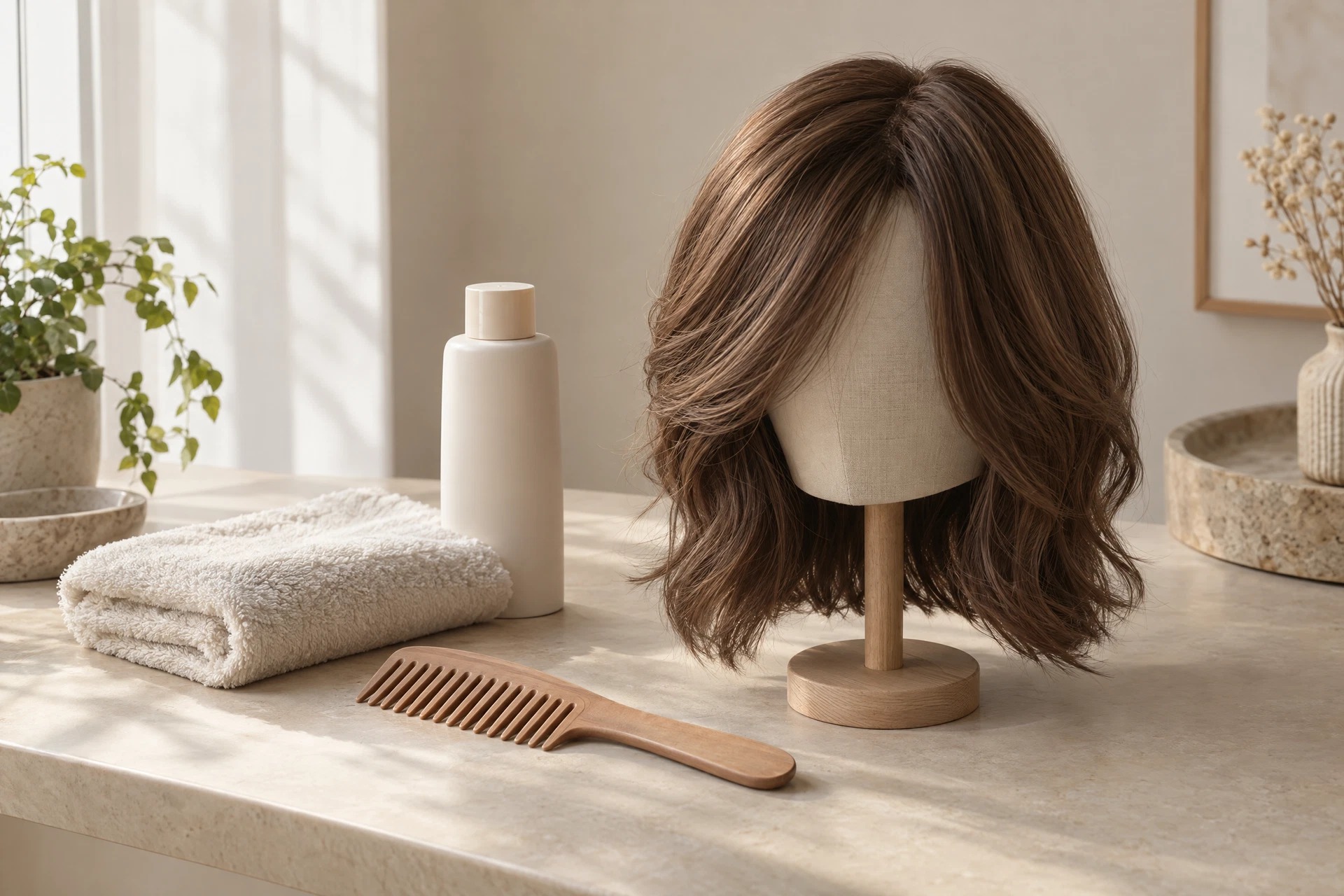
Integrating clothing care with wig maintenance keeps both garments and hairpieces looking their best. A routine that pays attention to wash labels, neckline construction, and drying materials will reduce friction, dye transfer, and premature wear to wigs. This article explains how to read common garment care symbols and language, how specific clothes and fabrics interact with wigs, and which drying choices protect your wig’s cap and fibers.
Why clothing and wig care need to be handled together
Wigs sit against skin, collars and fabrics. That close contact creates several points of interaction: mechanical friction from collars and pulls, moisture and oils transferred from skin and wet clothing, and potential dye transfer or lint adhesion. If you treat clothing and wigs as separate tasks, you can miss simple adjustments that prevent tangling, matting and staining.
Reading wash labels: the essentials for protecting wigs
Care labels tell you how a garment holds up to water, heat and agitation—factors that affect how the garment behaves near a wig. Look for these phrases and symbols:
- Machine wash cold/gentle or a basin icon: The garment is less likely to shrink or bleed in cool, low-agitation cycles. Cool, gentle garments are better near wigs because they typically shed fewer fibers and avoid heat-related dye bleeding.
- Hand wash only: These items can be delicate and may have finishes that shed or unravel when rubbed against a wig cap or lace front. Handle close contact garments carefully and avoid rubbing the wig against them.
- Do not bleach: Bleach can weaken fibers and cause increased lint and color instability; avoid using such chemicals on clothes you regularly wear with a wig.
- Tumble dry low/no heat: High heat can set dyes and shrink garments that then catch on wig hairs at the neckline. Air-dry when possible for fabrics that will be near the wig.
- Dry clean only: Some garments are treated with solvents and finishes that can transfer residues that affect wig fibers—be cautious if you wear them under or against a wig.
Understanding these instructions helps you choose garments and after-wash handling that minimize risks to both fabric and wig.
Neckline styles and friction: which cuts are friendlier to wigs
Neckline construction determines how often and how strongly fabric rubs against the wig cap. Consider these practical observations when selecting tops to wear with wigs:
- High collars and turtlenecks create repeated rubbing as you move your head. If the fabric is coarse or textured, it accelerates friction at the wig hairline and cap edge.
- Scooped or wide necklines reduce contact at the hairline, lowering friction and allowing better airflow for adhesive or lace-front ears.
- Zips, buttons and embellishments near the neckline can catch wig hairs; smooth necklines without hardware are safer for long or delicate fibers.
When choosing outfits, pick necklines and finishes that minimize back-and-forth rubbing. For synthetic wigs, which can be more vulnerable to heat and snagging, favor smoother fabrics and lower-friction junctions.
Fabric types that reduce or increase tangling
Fabric composition affects fiber release, static, and grip. Here’s how common fabrics interact with wigs:
- Cotton: Breathable and generally low-static; however, looser knits may pill and shed small fibers that cling to wigs. Well-finished cotton is usually safe.
- Synthetic knits (polyester, acrylic): These can generate static and attract loose fibers. They also can have a rougher surface that causes frictional tangling with wig strands.
- Satin and silk: Low friction and low static; excellent choices for reducing rubbing at the neckline and preserving smooth hair fibers.
- Wool and textured knits: Prone to pilling and shedding. Avoid direct contact at the hairline or wear a barrier like a silk scarf under these garments.
Choosing smoother, low-pile materials for the parts of garments that touch the wig makes a noticeable difference over time.
Drying fabrics away from wigs: why and how
Drying methods influence how fabrics finish: heat can set dyes and shrink fibers, while high spin cycles increase static. When drying clothes you wear with wigs, think about the final texture and residue left on the fabric.
- Air-drying preserves fabric hand and reduces static. Hang garments so the neckline stays flat and unwrinkled, avoiding direct contact with the wig while still slightly damp.
- Tumble drying with low heat or air-only can finish garments quickly but may increase static in synthetics. Use a low-heat cycle only if the garment’s care label allows it.
- Use dryer balls or a clean towel in the dryer to reduce static and friction during tumbling. Avoid fabric softeners on items worn with wigs if the label warns against residues.
When you dry garments separately from wig storage and styling areas, you reduce the chance that loose fibers or residue transfer onto the wig.
Simple in-routine adjustments to protect wigs
Small, repeatable steps in dressing and laundering prevent cumulative damage to wigs:
- When dressing, put the wig on after shirts with busy neck details or heavier fabrics are in place, so you can smooth collars away from the hairline before adjusting the wig.
- Wear a thin, low-friction base (like a satin scarf or underscarf) between the neckline and wig cap when wearing textured jackets or heavy knits.
- Reserve delicate garments for times you aren’t styling or adjusting a wig—extra handling increases friction and chance of snagging.
- Place freshly washed garments in an area separate from wig styling zones to avoid lint transfer while fabrics are still shedding.
Spotting dye transfer and removing stains safely
Dye transfer from a garment onto a wig can happen when a colored collar rubs against a wet or damp wig cap. If that occurs, act conservatively:
- Consult the wig care instructions first. Some human-hair wigs can tolerate careful shampooing and color-safe treatments; synthetics are more delicate and have narrow cleaning options.
- Blot—don’t rub—the area with a clean, dry cloth to remove surface pigment. Rubbing pushes dye deeper into fibers and the wig cap.
- For small spots, test any cleaning approach on an inconspicuous area. If in doubt, contact a wig care professional or the seller for recommended cleaning options.
Choosing laundry routines to minimize risk
Create a laundry workflow that protects both clothes and wigs:
- Separate garments by colorfastness and fiber type. Washing strongly colored items separately reduces dye migration risks.
- Follow care label instructions for detergents and cycles. Items labeled “gentle” or “hand wash” are less likely to shed fibers that transfer to wigs.
- Finish and store garments fully dry in clean areas away from wig storage to prevent condensation and fiber transfer.
Practical examples for everyday decisions
Example 1: If you plan to wear a new, richly dyed polo shirt with a lace-front wig, wash the shirt alone on a cool cycle and air-dry it before using. Choose a lower-contact neckline or add a satin neck scarf while wearing the wig.
Example 2: With a textured wool sweater, wear a smooth cotton or satin undershirt so the sweater doesn’t directly rub the wig cap. After washing the sweater, lint-roll it before storing near wigs.
Conclusion: small choices, big differences
Reading and applying garment care labels within a wig routine reduces friction, dye risk and lint transfer. Prioritize smooth fabrics at the neckline, follow wash/dry instructions, and adopt simple dressing habits—like using a satin underscarf or air-drying vulnerable items away from wig areas. These adjustments preserve both your clothes and your wigs, extending wear life and reducing styling time.
For related guidance on wig products and maintenance, check our collections and care resources: Collections, Lace Front Wigs, Regular Wigs, Human Hair Wigs, Accessories, Care, and for bulk or business inquiries see Wholesale. If you have specific product or order questions, please reach out via Contact.