
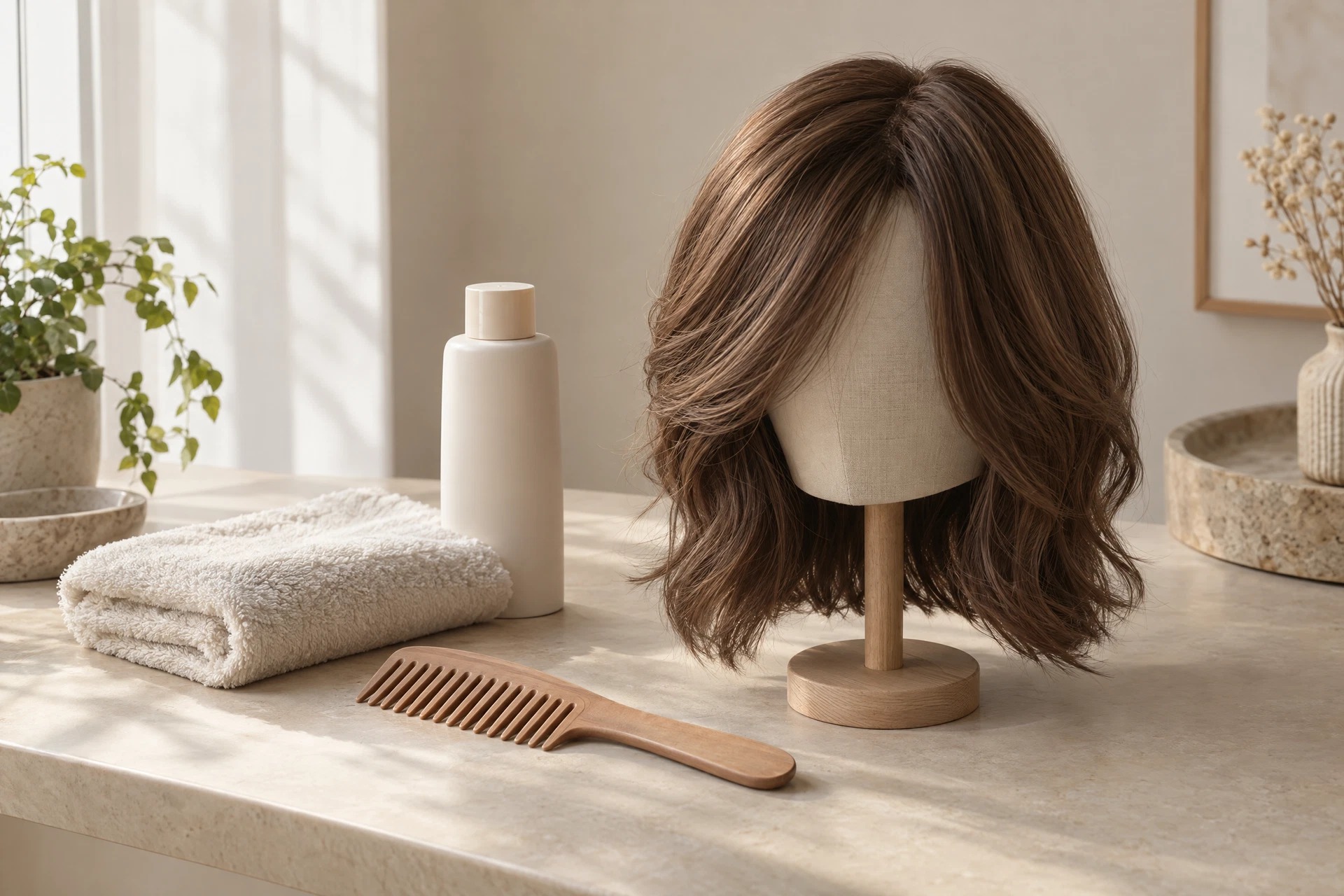
Drying a wig safely is one of the most important steps in wig care. Whether you're working with synthetic fibers or human hair, the wrong drying method can change the shape of the cap, loosen knots, cause frizz, or reduce longevity. This article walks through practical steps—towel blotting, promoting airflow, preserving cap shape and following label heat restrictions—so you can dry wigs efficiently and confidently.
Start with the product label: follow heat and handling guidance
Before you do anything, read the wig's label or instruction card. Manufacturers will indicate whether the fiber is heat-resistant, heat-friendly, or not heat-safe. These directions determine whether you can use hairdryers, heated styling tools, or only air-dry. Labels also often note recommended detergents or cleansing methods; using the suggested approach reduces the need for corrective styling after drying.
Gently remove excess water: the towel-blotting method
Towel blotting reduces drying time without stressing fibers. Use a soft, absorbent towel (microfiber is ideal) and never rub. Rubbing creates friction that roughens cuticles on human hair and frizzes synthetic fibers.
- Lay the towel on a flat surface and place the wig hair-down across it.
- Fold the towel over the wig so the hair is sandwiched, then press gently to absorb water.
- Repeat with a second dry towel if necessary. Replace saturated towels rather than continuing to press with a wet one.
- For lace-front or delicate caps, avoid heavy pressure on the lace area; focus absorption on lengths and ends.
Example: after a quick shampoo, you might blot three times with a microfiber towel, then switch to a slightly drier towel for two more presses—never wring the wig.
Support the cap shape during drying
Maintaining cap shape prevents stretching, misshaping, and an uneven fit. Use one of these methods depending on the cap type and available tools:
- Wig stand or head block: Place the wig on a breathable, appropriately sized stand to hold the cap's form and allow airflow around the interior.
- Padded mannequin or pillow: If a stand isn't available, a soft pillow or padded head-shaped pillow keeps shape while avoiding sharp pressure points that stretch lace or elastic.
- Inside-out technique for fragile lace: For lace-fronts, some stylists recommend positioning the wig inside-out on a cushion for the first drying stage to protect delicate front lace while hair dries slightly.
Tip: Check elastic bands and adjustable straps before drying. If the cap was hand-washed and the straps are damp and tightened, loosen them to avoid drying in a compressed position.
Promote airflow—natural and assisted air-drying
Gentle airflow shortens drying time while minimizing heat exposure. Natural air is ideal, but when assisted drying is needed, use indirect air and avoid prolonged focused heat.
- Room airflow: Place the wig on a stand near an open window or in a well-ventilated room. Avoid direct sunlight a long time—UV exposure may fade some fibers.
- Fan use: A low-speed fan is effective and safe. Position it to move air across the hair rather than blasting a single hot stream at the lace or cap.
- Hairdryer caution: If the label allows use of a dryer, select cool or low heat and keep it moving. Hold the dryer several inches away and avoid concentrating on one spot for extended periods.
Example: After blotting, set the wig on a stand in a room with a ceiling fan on low. If you supplement with a handheld fan, rotate the wig every 10 minutes so all sides receive airflow.
Detangle while damp—tools and techniques
Detangling a damp wig helps prevent breakage and keeps the final style smooth. Use the right tools and start from the ends.
- Wide-tooth combs or specialized wig brushes reduce pulling. Avoid brushes with stiff bristles on wet wigs.
- Work from the tips up to the roots, gently removing knots in small sections.
- For long wigs, hold the section you are working on near the root to reduce stress on the cap when combing.
Note: Some synthetic fibers are engineered to resist tangling and may require minimal combing. Follow the product guidance in /care/ for fiber-specific recommendations.
Respect fiber differences: synthetic vs. human hair
The drying behavior and styling tolerance vary by fiber:
- Human hair wigs: These behave like natural hair—responding to styling with heat but also prone to shrinkage or frizz if dried improperly. Always follow the manufacturer's heat guidance and consider using a protective, low-heat setting when allowed.
- Synthetic wigs: Many synthetics are heat-sensitive. Some modern synthetics are heat-friendly, but others are not. If the label prohibits heat, rely on towel blotting and airflow only.
When in doubt, treat the wig as heat-sensitive until you confirm the fiber's tolerance. For details on sourcing the right wig for your needs, see /collections/human-hair-wigs/ and /collections/synthetic-wigs/ if available in our catalog.
Finish styling with minimal heat and protective products
Once the wig is mostly dry, final styling can begin. Keep these safe finishing tips in mind:
- If heat is permitted, use the lowest effective setting and heat-protectant products made for the fiber type.
- For curls, consider heat-free methods such as foam rollers or setting with velcro rollers when heat is restricted.
- Use light leave-in conditioners or detanglers formulated for wigs to smooth frizz without weighing down the hair.
Example: For a human-hair wig that allows low heat, you might use a shallow round brush and a low-heat dryer for a short pass to set volume after most moisture has evaporated.
Drying frequency and storage after drying
How often you need to wash and dry depends on use—daily wearers may require more frequent maintenance than occasional wigs. After the wig is completely dry, store it to preserve shape and prevent dust buildup:
- Short-term: Place on a stand or mannequin head to keep shape.
- Long-term: Store in a breathable bag or box with tissue to support the cap and prevent flattening. Keep away from heat sources and direct sunlight.
Never store a partially damp wig. Trapped moisture can lead to odor, mildew, and accelerated fiber degradation.
Troubleshooting common drying issues
- Flat crown or misshapen cap: Re-wet the wig lightly (only if the label says wetting is safe), place on a properly sized stand, and gently re-shape the cap and hair as it dries.
- Sticky or stiff feel after washing: Rinse thoroughly during washing—residue from conditioners or heavy products can leave fibers feeling tacky if not fully removed.
- Persistent odor after drying: Ensure the wig was completely dry and aired in a ventilated space. For lingering odors, professional cleaning or manufacturer-recommended refresh treatments are safest.
Where to find products and professional help
For specialized brushes, stands and conditioning products designed for wigs, check our accessories collection at /collections/accessories/. If you need a replacement wig or want to compare cap constructions, explore /collections/lace-front-wigs/ and /collections/regular-wigs/. For wholesale inquiries or bulk accessory sourcing, contact our wholesale team via /wholesale/ or direct questions to /contact/—orders are currently managed by email and confirmed by ARIS BEAUTY SUPPLY.
Conclusion
Drying a wig safely combines gentle water removal, maintaining cap shape, encouraging airflow and obeying label-specific heat limits. Use towel blotting to remove excess water, support the cap on a stand or padded form, and rely on air circulation or low, label-approved heat for finishing. With careful handling, appropriate tools and attention to fiber-specific directions, you can preserve fit, texture and appearance through many washes. For product and care guidance tailored to a specific wig, check /care/ and our product collections, and reach out via /contact/ for any questions before placing an order.