
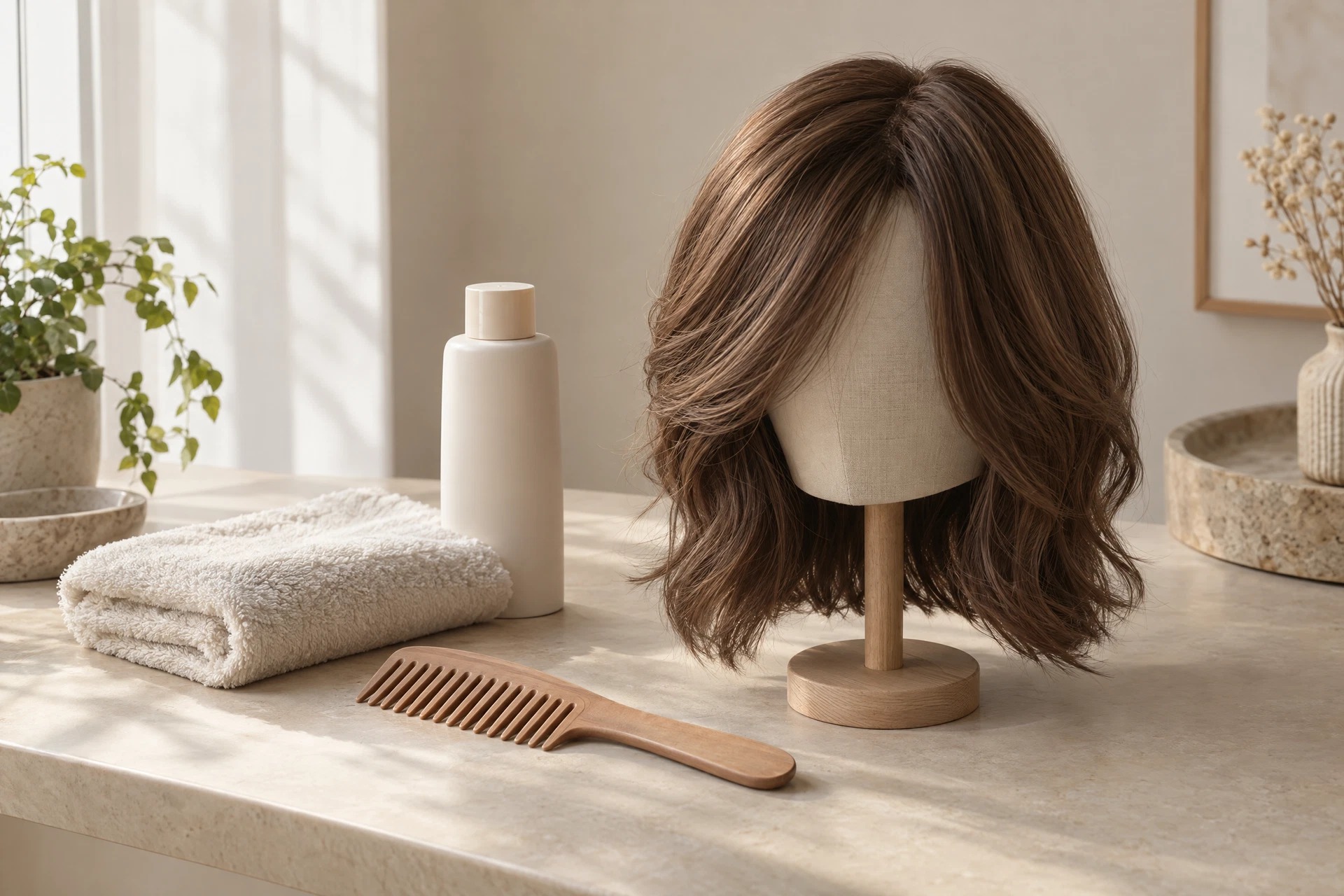
Keeping wigs looking their best starts with the tools you use. A few well-chosen items reduce tangling, protect cap construction and make styling easier. This guide walks through the essential wig care tools — why each matters, what features to prioritize, and how to match tools to synthetic or human-hair wigs without endorsing specific brands.
Why the right tools matter more for wigs than natural hair
Wigs are constructed from fibers attached to a cap rather than individual follicles rooted in skin. That changes how they react to tension, heat and moisture. A brush or towel designed for natural hair can snag lace, stretch seams or rough up fibers. Choosing tools made or selected for use on wigs — and applying gentle techniques — prolongs cap integrity and keeps the hair looking smooth and natural.
Wig stands and heads: pick the right base for storage and styling
A stable base is the backbone of any kit. You’ll use a stand or mannequin head to store, detangle, dry and style wigs. Consider these factors when selecting one:
- Material: Styrofoam heads are lightweight and inexpensive but can be fragile and may not hold pins well. Canvas-covered foam heads accept pins and are kinder to lace. Adjustable metal stands provide better height and stability for longer styling sessions.
- Size and shape: Match the head size to the wig’s construction. Smaller or larger faces on the head can distort stretchable caps if left long-term; use heads that approximate the intended wear size when possible.
- Portability and storage: If you need to travel with wigs, collapsible tripods or folding stands are useful. For home use, a weighted base reduces tipping risks during brushing or heat application.
- Use cases: A breathable canvas head is ideal for ventilation while drying. A robust plastic or foam head on a clamp or stand is handy for short-term styling and display.
Wide-tooth combs and detangling tools: protect fibers and cap construction
Detangling is the most common source of damage. Wide-tooth combs and purpose-built detangling tools minimize pulling and breakage. When choosing one, look at:
- Tooth width and spacing: Wide teeth reduce tension when working through knots, especially on long or textured wigs. Tighter spacing is fine for short styles or smoothing, but start with a wide-tooth tool and work gradually to finer combs.
- Edge design: Smooth, rounded teeth avoid snagging lace fronts and prevent micro-tearing at the base of fibers. Avoid combs with rough injection-molded edges.
- Material: Plastic and acetate are common; silicone or rubberized handles improve grip. Some detangling brushes combine flexible blades that bend under resistance, which is effective on human-hair wigs that mimic natural hair behavior.
- Technique tip: Always detangle from the ends upward, holding the wig near the roots to avoid stressing the cap. Work in sections and use gentle, short strokes rather than long, forceful pulls.
Towels and drying accessories: choose fabric that protects fibers and lace
How you dry a wig matters. Ordinary bath towels can be too abrasive and encourage frizz or snagging. Look for towels and drying aids that are compatible with delicate wig fibers and cap materials.
- Fabric type: Microfiber towels are a common choice because they absorb water without the rough nap of terry cloth. They reduce friction and help prevent tangles. Some microfiber weaves are softer than others, so test a small area if possible.
- Size and weight: A medium-sized towel balances coverage and manageability. Too heavy a towel can compress a wig and deform curls; lightweight microfiber is less likely to distort styles during blot-dry.
- Label compatibility: Check wig care labels before using any drying product. Some synthetic fibers recommend air drying on a stand and warn against vigorous towel rubbing. Match your drying approach to the label’s instructions.
- Alternative drying aids: Breathable mesh drying caps and stands let air circulate, reducing drying time without touching the fibers directly. Use these when the label permits and avoid placing wet wigs on surfaces that can stretch or flatten the cap.
Brushes and styling tools: select based on fiber type and cap construction
Brush selection depends on whether the wig is synthetic or human hair and whether the cap includes lace. General guidance:
- Synthetic wigs: Use brushes with flexible bristles or wide-spaced teeth. Many synthetics are heat-sensitive, so avoid brushes designed for hot styling unless the product label indicates heat tolerance.
- Human-hair wigs: These tolerate more styling tools but still benefit from gentle brushes. Choose natural boar bristle or mixed bristle brushes for smoothing and distributing conditioners. Reserve denser bristle brushes for finished smoothing, not heavy detangling.
- Lace-front and delicate caps: Brushes with soft, rounded bristles are less likely to catch lace. When styling near the hairline or baby hairs, use a small soft-bristled brush or a toothbrush dedicated to wig work to maintain delicate areas.
Clips, pins and fasteners: protect the cap when securing wigs
Securing a wig while styling or wearing requires fasteners that hold without cutting or stretching the cap.
- Plastic or fabric-covered clips: These are less likely to snag lace or seam tape than raw metal clips. Use clips that grip hair or a wig cap rather than the wig fibers themselves.
- Pinning into heads: Use T-pins with heads or long wig pins when mounting wigs on foam heads, but avoid excessive pinning near lace fronts. Pin through a fabric-covered head to reduce the chance of tearing the cap.
- Adhesive options: Double-sided wig tape and medical-grade adhesives are common for wear, but always confirm compatibility with the wig label and wearer’s skin type. Adhesive removal products should be part of the kit if adhesives are used regularly.
Storage bags, stands and travel cases: prevent deformation and dust buildup
How you store wigs affects longevity. Consider storage tools that shield the wig from compression, dust and humidity while preserving style.
- Ventilated storage: Breathable garment bags or mesh pouches protect from dust without trapping moisture. Avoid sealed plastic for long-term storage, as that can trap humidity and promote odor or fiber degradation.
- Structured cases: Hard or semi-rigid cases keep the wig’s shape during transport. If choosing a case, ensure it accommodates the wig’s length and bulk without compressing curls or waves.
- Stand vs. box: Short-term storage on a stand helps maintain style; long-term storage in a compatible bag on a padded surface reduces stress on the cap. Alternate storage approaches depending on how often the wig is worn.
Label-compatible purchases: match tools to care instructions
Wig labels provide the most important guidance for tool selection. They may specify heat limits, recommended cleaning methods and drying instructions. Before adding any tool to the kit, cross-check with the label:
- If the label warns against heat, exclude thermal brushes or high-heat tools.
- If the label advises air drying on a stand, prioritize lightweight microfiber towels and breathable stands rather than tumble-drying or vigorous blotting.
- For wigs with delicate lace fronts, choose brushes and combs with smooth, rounded tips and avoid anything that could catch the lace edge.
Assembling a starter wig care kit: practical checklist
Here’s a compact starter kit you can adapt by fiber type and use case. Adjust quantities and specifics per label recommendations and how often you wear or style wigs.
- Canvas or breathable mannequin head with an adjustable stand
- Wide-tooth comb and a flexible detangling brush
- Soft microfiber towel or small drying cloth
- Small soft-bristled brush (for hairline/baby hairs)
- T-pins and fabric-covered clips for mounting and securing
- Ventilated storage bag and a structured travel case (optional)
- Adhesive remover and a roll of double-sided tape (only if using adhesives)
Maintaining your tools so they keep protecting your wigs
Tools need care too. Rinse combs and brushes after product use and let them air dry fully before storing to prevent mildew. Replace or gently sand any combs with rough edges; even small burrs can damage lace or fibers. Periodically inspect stands and heads for deformation or wear that might alter the wig’s fit over time.
Where to get specialized tools and help
For a wide selection of wig care supplies and tools suited to different fibers and cap constructions, browse accessory options in our catalog and guidance pages. If you need wholesale quantities or have questions about compatibility with specific wigs, contact us directly to confirm product availability, wholesale policies and care recommendations. Helpful pages to check are our collections of accessories and wig types:
- /collections/accessories/
- /collections/lace-front-wigs/
- /collections/regular-wigs/
- /collections/human-hair-wigs/
- /care/
- /wholesale/
- /contact/
Choosing the right wig care tools is less about buying everything at once and more about matching a few dependable items to the wig’s fiber type and labeled instructions. Start with a good stand, a wide-tooth comb, a soft towel and gentle brushes, and expand the kit as you learn what each wig in your rotation needs. Proper tools plus appropriate technique will keep wigs looking fresh longer while protecting delicate caps and hairlines.
For questions about specific items or to request pricing and availability, please reach out through our contact page — orders and wholesale details are confirmed directly by the company.