
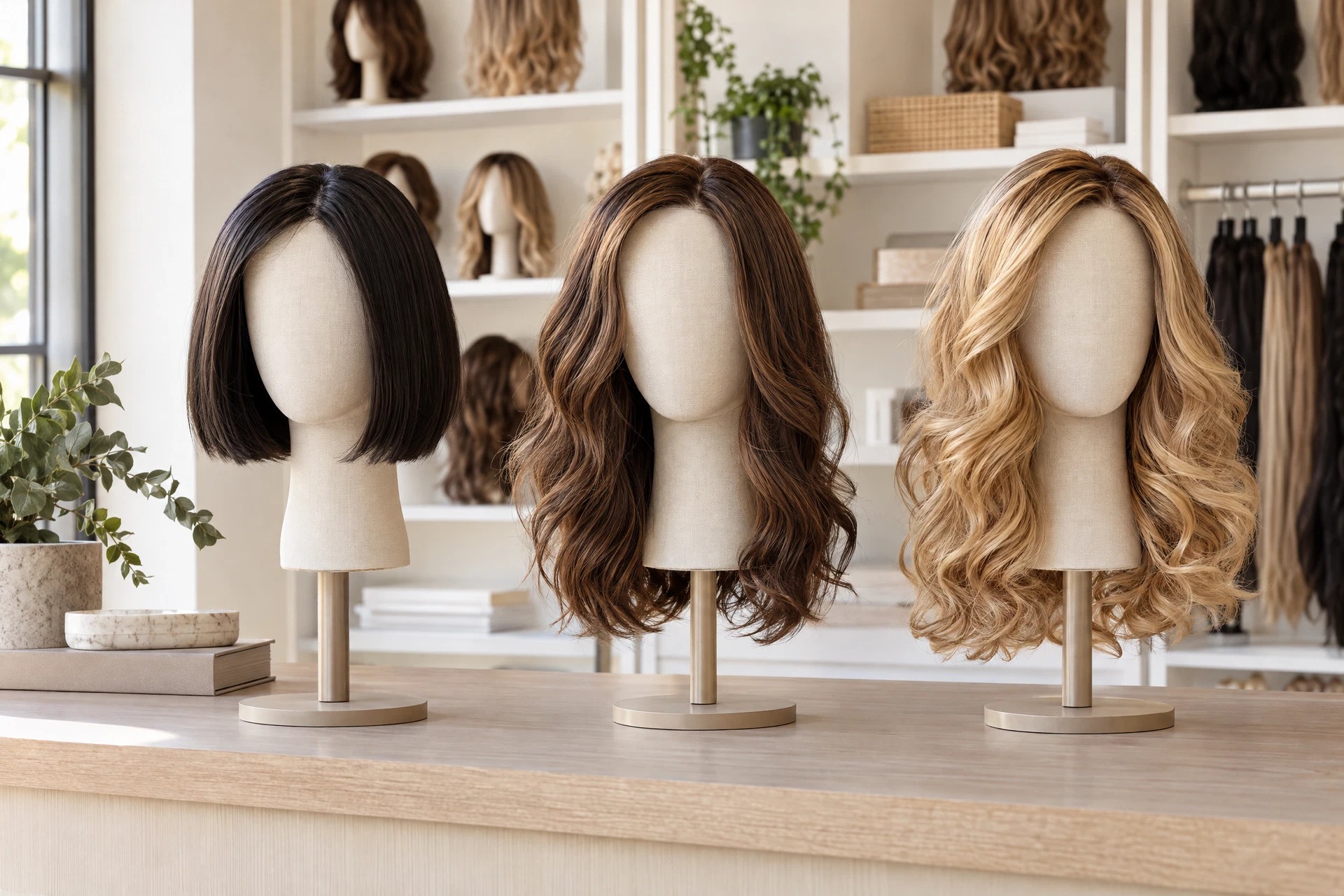
When a customer asks about lace front wigs, sales staff should be ready to explain what they are, how they differ from other wig types, and what customers should expect in everyday use. This article provides practical talking points, demonstration ideas, and tips for handling common questions without overstating benefits. Use these suggestions to help customers choose the right product from your inventory and to set realistic expectations.
Start with a concise definition
Keep the opening explanation simple and focused: a lace front wig features a thin, sheer lace strip along the front hairline where individual hairs are knotted to the lace. This creates the appearance of a hairline that looks more natural than a wig with a visible front cap edge. Avoid implying that lace front wigs are always superior—clarify that the effect is localized to the front hairline and that other wig construction elements also affect fit and realism.
Compare lace front to other wig constructions
Retail customers benefit from comparisons that highlight differences without blanket claims. Use side-by-side demonstrations when possible.
- Regular (traditional) wigs: These often have a solid cap with hair sewn into wefts. They can offer strong coverage and simpler maintenance but may show a defined edge at the forehead.
- Lace front wigs: Offer a sheer front that can create a more seamless hairline. The illusion is concentrated at the front; the cap behind it may be wefted or made from other materials.
- Full lace wigs: Have lace across the entire cap and allow more versatile parting and styling, but typically cost more and require different care.
Use examples from your stock—point to a lace front in /collections/lace-front-wigs/ and a traditional wig in /collections/regular-wigs/ so customers can compare edge visibility and parting options.
Explain hair type and how it affects look and care
Lace front wigs come in synthetic, heat-friendly synthetic, and human hair options. Each has trade-offs that matter to the buyer:
- Synthetic: Often less expensive and pre-styled, but less tolerant of heat styling and more sensitive to certain products.
- Heat-friendly synthetic: Offers more styling flexibility than basic synthetics but still has limits compared to human hair.
- Human hair: Gives the most styling versatility and a realistic appearance, but requires more care and is generally pricier.
Link to /collections/human-hair-wigs/ when customers are considering natural hair options so they can compare in person or consult available catalog entries.
Discuss fit, cap types, and sizing
Fit affects comfort and appearance as much as the lace. Explain cap types (standard wefted, monofilament, full lace) and how they interact with lace fronts. Customers should be encouraged to try caps on when possible and to check adjustable straps or tabs for fit. If a customer needs help measuring, provide a quick guide and point them to caps in multiple sizes within /collections/ so they can feel the difference in person.
Demonstrate application basics and show honest limits
Walk through basic application steps without suggesting every customer must use adhesives. Demonstrate how a lace front sits on the forehead, how to trim excess lace carefully, and how adhesives or tape can be used for a longer-lasting bond. Make clear that:
- Not all users need glue—many achieve a satisfactory look with clips, combs, or adjustable straps.
- Adhesives can provide a closer lay but require careful removal and skin testing for sensitivities.
- Visible baby hairs and scalp appearance depend on lace quality and how hair is ventilated; lower-cost lace fronts may require additional styling to look seamless.
For customers considering adhesives or specialized adhesives, steer them toward /collections/accessories/ for suitable products and remind them that company confirmation is required for orders and product availability inquiries are handled via /contact/.
Set realistic expectations about maintenance
Explain care differences clearly and avoid prescribing universal regimes. Emphasize that upkeep varies by hair type and construction. Offer these practical pointers:
- Follow the product’s care label for washing, drying, and styling instructions.
- Human hair wigs can be treated like natural hair in many ways but still require gentler handling at the cap and knots.
- Synthetic wigs often return to their original style after a designated styling process and may not tolerate repeated heat styling.
If a customer wants a printed care guide, point them to /care/ where they can find product-appropriate general advice and to /new-arrivals/ for recently stocked items that may have updated care instructions.
Address common customer concerns and objections
Prepare short, factual responses for frequent worries:
- “Will this look real?” Explain that the front hairline can look very natural, but overall realism depends on lace quality, cap construction, hair density, and correct color match. Offer to show different densities and parting options in the store.
- “Is this comfortable all day?” Comfort varies by cap fit, weight of the hair, and personal sensitivity. Encourage trying the wig for short periods before committing to longer wear.
- “How long will it last?” Longevity depends on material, frequency of wear, and care. Give a range of expectations rather than a fixed number and refer wholesale or bulk inquiries to /wholesale/ for lead times and terms that need company confirmation.
Use styling demonstrations to add value
Practical demonstrations build confidence. Show how simple styling—creating a soft side part, adding baby hairs, or using a flat iron on human hair—can change the look. For synthetics, demonstrate brushing tools and products that maintain shape. Clearly label which demonstrations apply only to human hair versus synthetic to avoid damage. If a customer wants to see adhesive application, use a mannequin or disposable skin patch rather than applying to live skin, and explain safety and testing steps.
Guide customers through purchase decisions
Help customers weigh priorities: realism, budget, styling flexibility, care commitment, and intended frequency of wear. Offer comparison checklists and point to linked collections for options they can examine later: lace front selections in /collections/lace-front-wigs/, human hair in /collections/human-hair-wigs/, and accessories in /collections/accessories/. Remind them that orders are handled as inquiries—direct them to /contact/ for assistance with availability, wholesale pricing, minimum order quantities, and lead times so the company can confirm details.
Conclusion: honest, practical guidance wins trust
When selling lace front wigs, your job is to explain features clearly, demonstrate realistic outcomes, and set accurate expectations about fit, styling, and maintenance. Avoid universal claims and tailor explanations to the individual customer’s needs—this builds credibility and leads to better customer satisfaction. Use in-store comparisons, safe demonstrations, and the resources linked above to help customers make informed choices. If a customer needs further details about availability, wholesale terms, returns, or shipping, direct them to /contact/, /wholesale/, /returns/, or /shipping/ so the company can provide confirmed answers.