
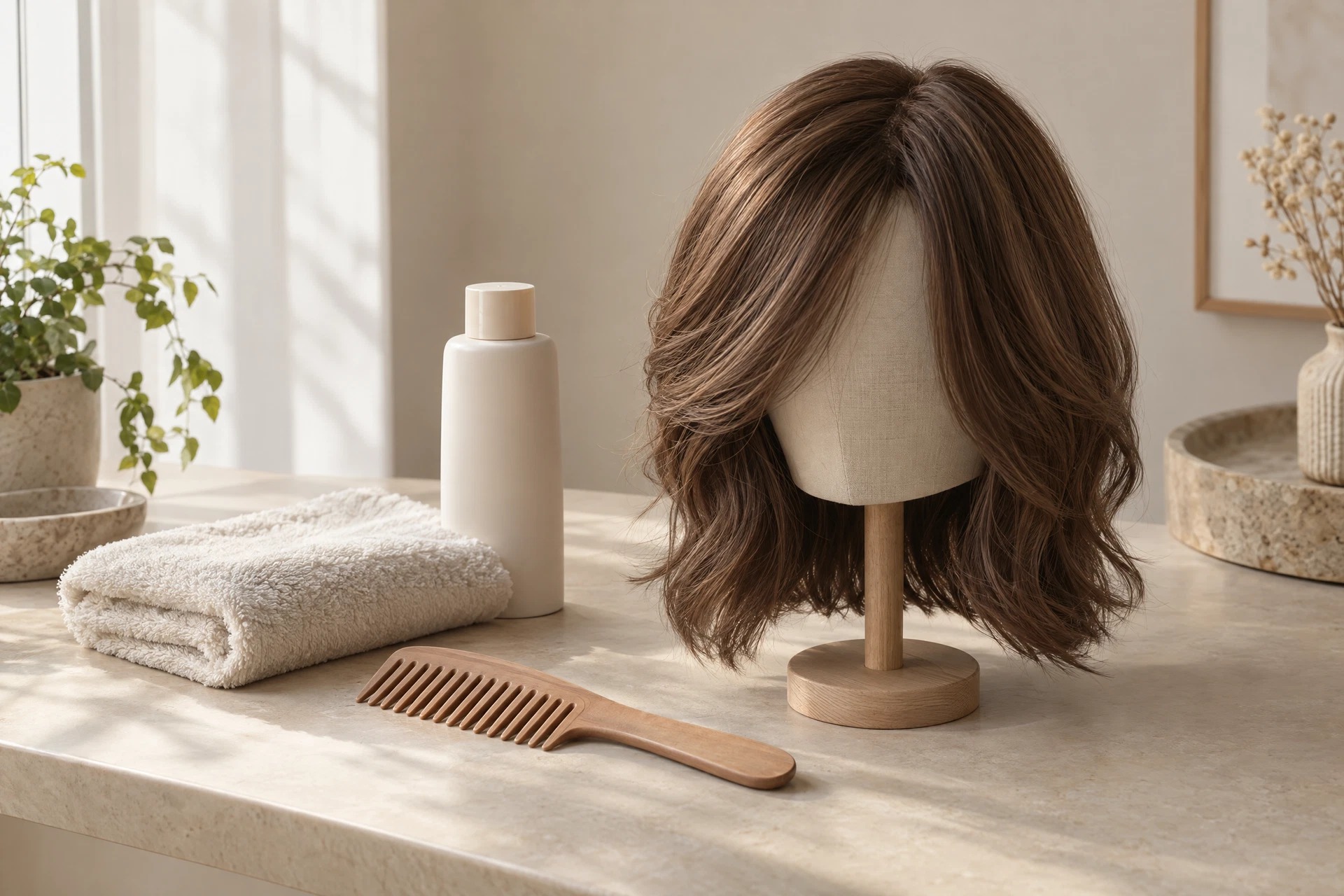
Curly wigs are prized for their bounce, texture and the natural look they provide—but the very qualities that make them attractive also make them easy to damage. The wrong comb, heavy product or overzealous brushing can loosen clumps, create frizz and flatten the curl pattern. This article focuses on four practical strategies to maintain curl definition: finger separation, conservative detangling, choosing products that match the wig’s care label, and using a dry reset. Each section offers step-by-step methods you can use at home, with examples and troubleshooting tips.
Understand the wig’s material and read the care label first
The baseline for any successful maintenance routine is understanding whether your curly wig is synthetic, heat-friendly synthetic, or human hair. The care label supplied with the wig contains manufacturer guidance on washing frequency, allowed temperatures, and suitable styling approaches. Before you apply any methods below, confirm what the label permits—especially for heat and certain chemical products—so you don’t unintentionally void the vendor’s recommendations.
Why curl clusters matter and how finger separation protects them
Curly wigs form pattern through clusters of hair that sit together and define a coil, curl or wave. When those clusters are separated with a brush or comb, the uniform pattern breaks down and frizz appears. Finger separation maintains the clusters without disrupting the internal structure.
- When to use it: After washing and conditioning, and when you need to revive the style between wash days.
- How to do it: Work with damp or lightly misted hair—never bone dry for human hair and follow label guidance for synthetics. Slide your fingers through the hair from root to mid-length, gently pulling apart only where clumps are forming. Focus on the outermost clusters rather than disrupting each curl’s interior.
- Example: If curls look glued together at the crown, hold a cluster at the root with one hand and use your fingers to pull a thin strand from the edge outward with the other hand; repeat around the area until the crown has balanced volume.
Conservative detangling: protect the pattern while removing knots
Detangling is often the most damaging step when it’s rushed. Conservative detangling minimizes stress on curl bonds and helps maintain the original pattern.
- Start from the ends: Always begin at the tips and work upward in small sections. This reduces pulling and prevents tightening knots toward the root.
- Section method: Divide the wig into four to eight manageable sections and clip or pin them. Work on one section at a time so you don’t re-tangle freshly detangled areas.
- Tools and technique: Use a wide-tooth comb or detangling brush designed for curls. For human-hair wigs, use a brush gently; for many synthetic wigs, finger detangling is preferable. When using a comb, hold the section at the root to steady the hair and comb downward in short strokes.
- Use slip: Apply a leave-in conditioner or detangling spray that is compatible with the wig’s label. For curly wigs, slip is essential—products that add slip allow the comb to move through a knot without shearing the strands.
Choose products that match the care label and curl type
Products can make or break curl definition. Heavy creams weigh curls down; alcohol-heavy sprays dry them out. Match products to both the wig fiber and the specific curl pattern.
- Read the label: If the manufacturer warns against certain ingredients or heat, follow that guidance. For example, many synthetic wigs should never be exposed to high heat or certain alcohol-based formulas.
- Daily refreshers: For human-hair curly wigs, a lightweight water-based leave-in with a touch of glycerin can restore moisture and definition. For heat-friendly synthetics, use specialized wig conditioners designed for synthetic fibers.
- Styling products: Use small amounts and apply by scrunching rather than brushing. Emulsify creams between your palms and scrunch into curls from ends to mid-lengths to avoid flattening roots.
- Avoid buildup: Periodically use a mild clarifying approach recommended on the label to remove residues that can weigh curls down, but don’t over-clarify—this can strip essential moisture and texture.
Wash carefully—preserve structure, don’t overdo it
Washing frequency depends on wear and the wig type. Over-washing can relax curl pattern; under-washing can lead to product buildup and limpness.
- Pre-wash preparation: Finger-separate gently and apply a compatible conditioner to areas with tangles. Let it sit according to label suggestions before attempting to detangle.
- Gentle technique: Use a downward motion when rinsing and avoid vigorous rubbing. For human-hair wigs, treat them like natural curly hair: use lukewarm water, a curl-friendly shampoo and a nourishing conditioner. For synthetics, follow the specific washing instructions on the care label.
- Drying: Pat with a microfiber towel or a soft T-shirt—avoid wringing. Air-dry on a wig stand to preserve the cap shape and let gravity help maintain curl direction.
Dry reset: a low-risk way to restore curl pattern
A dry reset revives curl clusters without a full wash. It’s especially useful between washes or when travel or time constraints make washing impractical.
- When to use it: If curls look frizzy but are not heavily soiled, or after sleeping in a wig for a day or two.
- Method: Lightly mist the wig with a water-based refresher or a blend of water and a small amount of leave-in (verify label compatibility). Use your fingers to re-form clusters by twirling or clumping individual curls back into their original pattern. For tighter coils, use a twisting motion around your finger to reform the curl. Allow the hair to air dry completely on a wig stand.
- Example: For a wig whose curls have loosened at the ends, spritz the ends only, scrunch and allow time to set. Avoid saturating the root unless necessary for a full reshape.
Dealing with frizz and single-strand fluff
Frizz often results from stray single strands separating from a cluster. You can tame this without destroying definition.
- Spot treatment: Apply a tiny amount of product—serum or light oil—on your fingertips and smooth only the stray strands. Don’t coat the entire section, which will alter overall texture.
- Clip-and-set: For human-hair wigs, small pin curls or clips can reset single-strand fluff; check the wig label before using heated styling tools for setting.
- Trim if needed: If single-strand fluff results from split or uneven ends, a careful trim by a stylist experienced with wigs can restore uniformity without thinning the curl pattern.
Storage and nightly care to protect the pattern
How you store and sleep in a curly wig affects pattern longevity. Proper nightly and storage routines reduce tangles and flattening.
- Short-term storage: Use a wig stand or mannequin head to preserve shape and allow airflow. Avoid leaving wigs crumpled in a bag.
- Long-term storage: Lay the wig gently in a breathable box with tissue to support the curls. Never compress curls under heavy items.
- Nighttime wear: If you sleep in a wig, loosely pineapple (gather hair at the top) or wrap with a silk scarf to reduce friction. For lace-front wigs, always secure per the cap instructions to avoid shifting.
Troubleshooting common problems
Even with care, issues will arise. Here are practical fixes that preserve curl pattern.
- Flattened roots: Use finger separation at the root and a small amount of product at the root only to encourage lift. A wig head can help the root settle while drying after a light mist.
- Excessive tangling: Try a targeted conditioning treatment following label recommendations and detangle starting from the ends with generous slip.
- Loss of curl definition after product use: Clarify gently to remove buildup, then rehydrate and perform a dry reset or light re-styling consistent with the label.
When to consult professionals and where to buy supplies
If the wig is heavily damaged, a professional wig stylist or the vendor’s customer service can advise on restoration options that won’t further harm the fibers. For supplies—detangling products, wig stands, conditioners and specialist tools—refer to the vendor catalog and care resources. If you need wholesale buying or have questions about availability and order procedures, contact the supplier directly; orders are processed through inquiry channels rather than direct paid checkout.
For related resources, see our product collections and care guidance: collections, lace front wigs, regular wigs, human hair wigs, accessories, and our care page. For purchases, wholesale inquiries or shipping questions consult wholesale, shipping and contact.
Conclusion: Curly wig care that preserves pattern is mostly about restraint and compatibility—use gentle, sectioned detangling; separate curls with your fingers rather than tools; choose products and washing methods that match the wig’s label; and use a dry reset to quickly restore clusters. With these tactics you’ll extend the life and look of curly wigs while keeping the texture that makes them special.